Beginner recurve bows
F158 or F167: Get your first recurve right the first time.
Two beginner target bows, same friendly price, same job: learning clean form and hitting targets. The only real question is which one fits you. Answer it in two minutes below, and buy with confidence.
- Matched to your size and draw
- Ships tracked Australia-wide
- Real beginner support before and after you buy
The 60-second answer
Neither bow is better. They fit different beginners.
The F158 is the simplest, lowest-risk way to start shooting. The F167 is just as easy to learn on, but its ILF design can grow with you instead of being replaced.
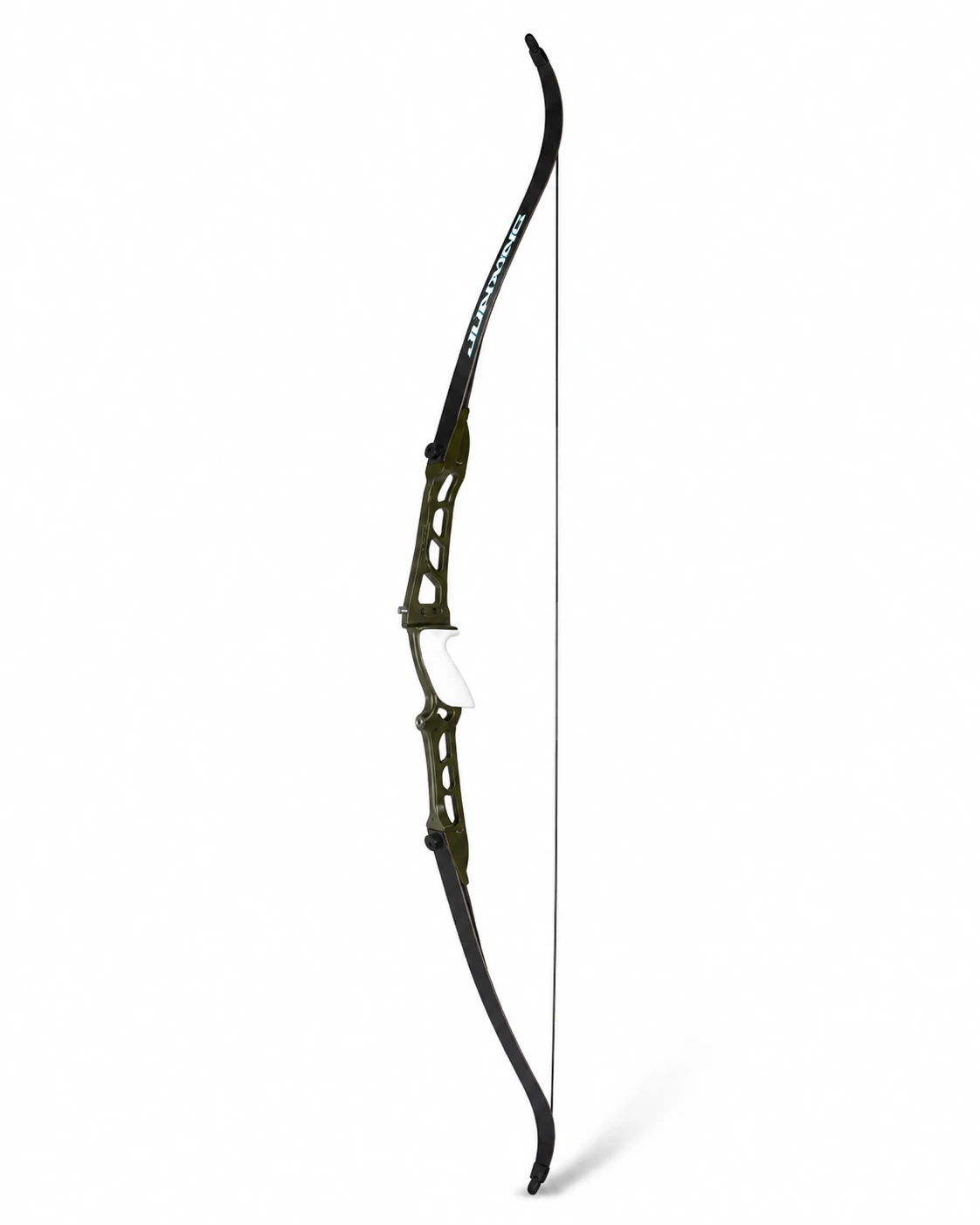
Choose the F158 if
The simple first-bow route fits you.
- You want the simplest, lowest-risk bow to learn on.
- You will mostly shoot fixed targets for fun.
- You are taller or have a longer draw and want a smoother, more forgiving shot.
- Simplicity and value are your deciding factors.
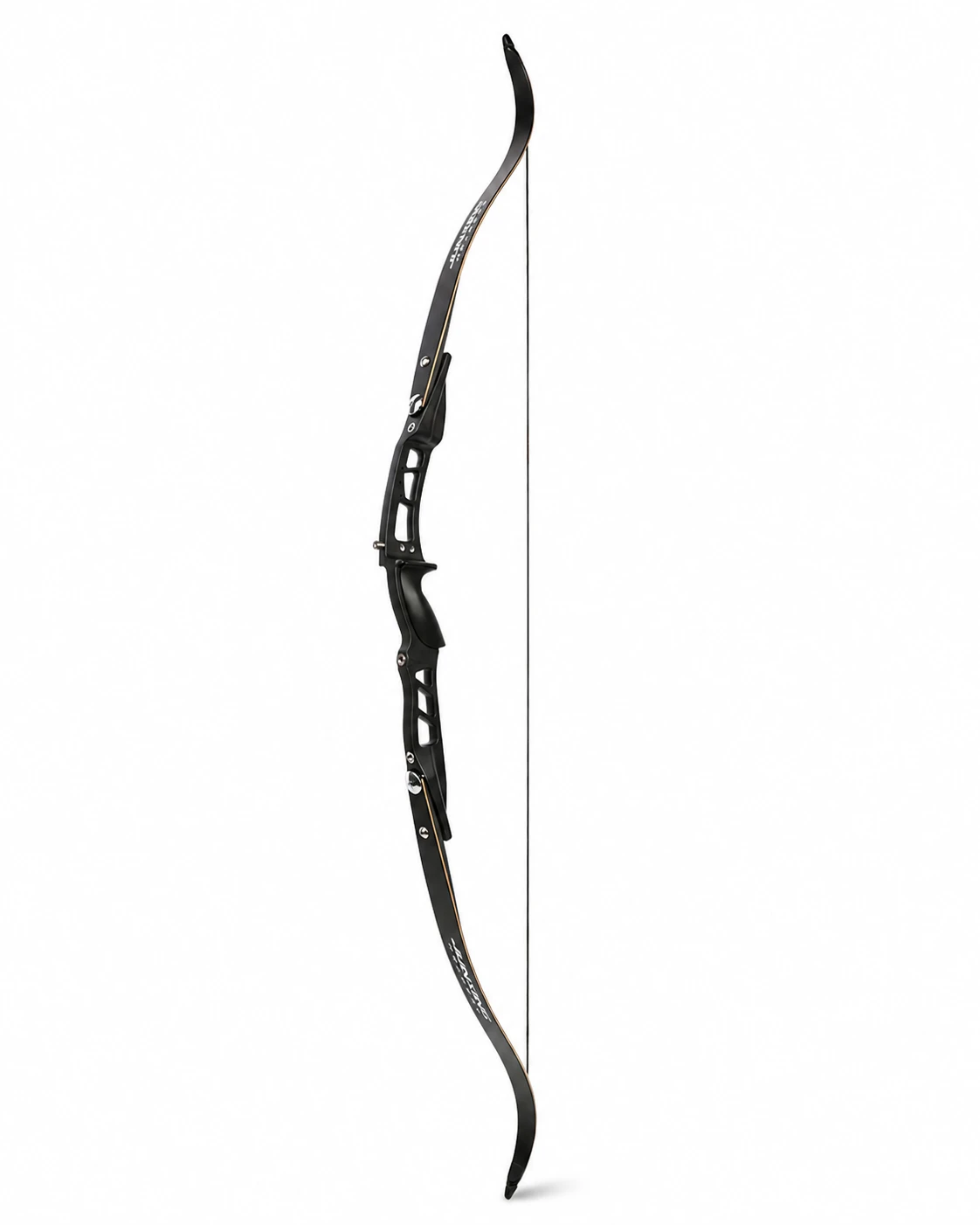
Choose the F167 if
The upgrade path matters to you.
- You already suspect you will keep at this for a while.
- You want to raise draw weight later without buying a new bow.
- You are smaller-framed, a teen, or you carry your bow around a lot.
- You want the option to try barebow or light competition down the track.
Step 1
Pick your draw weight first.
If archery does not stick for someone, the reason is almost always the same: the bow was too heavy. A bow that is too strong wrecks your form before you have built any, and at this stage, form is the entire game.
Rule: when in doubt, go lighter. Form first, power later.| You are | Start around | On the F158 | On the F167 |
|---|---|---|---|
| Adult man, average build | 24-28 lb | 20-40 lb range | 24 or 28 lb |
| Adult man, athletic / strong | 28-30 lb | Yes | 28 lb, move up later |
| Adult woman, average build | 20-22 lb | 20 lb | 20 lb |
| Adult woman, athletic / strong | 22-26 lb | Yes | 24 lb |
| Smaller-framed adult | 20-22 lb | From 20 lb | 20 lb |
| Teen, 13-17 | 20-22 lb | From 20 lb | 20 lb |
F158 starts at 20 lb.
That touch-lighter floor makes it a kind choice for the lightest adults and for bigger teens still building strength.
F167 lets you swap limbs.
If “I will probably want more poundage later” sounds like you, that single fact points straight to the F167.
Step 2
Decide your upgrade path and fit.
After draw weight, the choice is simpler: decide whether you want the F167’s ILF upgrade path, then check whether a longer or more compact bow suits your body and carrying needs.
You probably do need ILF.
Choose F167 if you can already feel you will stick with this, expect to raise draw weight, or would like to experiment with your setup later.
You probably do not need ILF.
Choose F158 if you want one good bow to learn on, you are happy shooting fixed targets, and you would rather not think about parts and systems.
Length changes the feel.
F158 is the longer 68 inch option: smoother and more forgiving for taller archers and longer draws. F167 is the 66 inch option: more compact for smaller frames and carrying.
Side by side
Only what matters.
Both bows use a 23 inch entry-level target riser: superb for learning and recreation. For almost every first-time archer, that is exactly the right place to begin.
| What beginners ask | F158 | F167 | What it means for you |
|---|---|---|---|
| Easiest to start on | Best | Good | The F158 starts at 20 lb and is a longer, steadier bow. |
| Can I upgrade weight later? | No | Yes, ILF | F167: swap limbs and keep the bow. F158: buy a new bow to change weight much. |
| Best for taller / long draw | Best | Good | The F158 is 68 inches with a 32 inch max draw. |
| Best for smaller frame / youth | Good | Best | The F167 is more compact and easier to control. |
| Buy it and just shoot | Best | Good | The F158 keeps things simple; the F167 invites you to tune and tinker. |
| Room to grow / light competition | Good | Best | ILF gives the F167 a genuine upgrade runway. |
Before checkout
A 2-minute setup check.
A bow on its own is not ready to shoot. A few basics turn your first session from frustrating into fun.
Right- or left-handed bow
Choose by dominant eye, not writing hand. Right-eye dominant means right-handed bow; left-eye dominant means left-handed bow.
Matched arrows
Arrows need the right spine for your draw weight and draw length. Message us before ordering if you need arrows arranged by sea freight.
Basic protection
Use a finger tab or shooting glove, an arm guard, a bow stringer, and a safe target backstop.
Straight talk
What these bows are, and are not.
These bows are built for learning proper form, recreational and club target shooting, family and social sessions, and a confident first season in the sport. They are not elite 70-metre competition platforms; those use 25 inch risers and high-end limbs.
We would genuinely rather you buy the right bow once than the wrong bow twice.Frequently asked questions
Quick answers before you order.
Use these answers to confirm the choice, then message us if your setup still feels unclear.
Email info@archeryline.comWhich draw weight should I start with?
Lighter than you would guess. Most adult men start around 24-28 lb, most adult women around 20-22 lb, and teens around 20-22 lb. Build good form at low weight first.
Can I increase the draw weight later?
On the F167, yes. It is ILF, so you keep the bow and swap in heavier limbs. On the F158, changing weight much usually means buying a new bow.
What is the difference in one sentence?
The F158 is the simplest, lowest-risk bow to learn on. The F167 is an ILF bow you can grow with: upgrade limbs and add accessories without starting over.
How do I choose right- or left-handed?
Use your dominant eye. Make a small triangle with your hands, centre a distant object, then close one eye at a time. The eye that keeps the object centred is dominant.
Which is better for a taller person?
The F158. At 68 inches with a 32 inch max draw, it stays smooth and forgiving for longer draws. The 66 inch F167 suits smaller frames and shorter draws.